
Thrax Audio Introduction & Tech pt.2
- boyan8796
- Feb 6
- 3 min read
As you know, a line level pre-amplifier is the center of operations for your audio system. It is used for source selection, volume control, and to optimally drive the power amplifiers.
In the previous post I covered the selection of the input technology and its properties, the second function of the line level pre-amplifier is to adjust the level of the signal being sent to the power amplifiers. Considering that each one of the sources can have a different nominal level signal coming out of it we need to have the ability to adjust for that in quite a large range.
In most cases we don’t want the whole signal of the source to go to the power amplifier so we reduce it’s level (attenuate it) or in the case where it is not enough we amplify it.
There are a lot of different attenuators being used for that purpose. By far the most popular and easy to implement is the Volume potentiometer. Simple, cheap and the cause of many problems.
A more sophisticated solution will be a switched resistor ladder, but in principle it is still a pot with discrete values.
Main issues with volume control solutions:
1. Loss of power transmission from source
2. Degrading signal to noise
3. Increasing output impedance of source
4. Bandwidth limitation
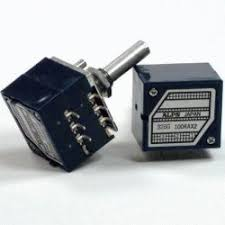
Resistors are noise sources. So any resistor in our signal path will add noise to the system. A pot is a resistor, so while attenuating the signal we keep adding resistance to the source making its output noisier. Worst case being the middle (-6db) on any pot. A 47k Resistor makes 2uV of noise in ideal conditions. As a simple example: You just spent your money on a super DAC with 126db signal to noise and an output ov 2Vrms. The mid position of that pot already reduced your signal to noise by 10-12db not counting what comes next.

Sound character changes with volume setting due to high impedance resistive attenuation at the input.
This variable impedance is the cause of change in frequency response and increase of noise levels. You literally attach a resistor in series with the output of your source adding the noise of that resistor and to the output impedance of the source limiting it’s drive capabilities while at the same time decreasing the input impedance (making it harder to control) of the input of the gain stage greatly reducing the power available to drive it.

Common solution is lowering the pot resistance as modern sources are high output and low impedance and this is widely accepted trade off.
Some designers use techniques like cascode input to mitigate some of the effects or input buffer allowing further reduction of the pot resistance. All are valid solutions but add complexity, distortion and noise.

To solve this power loss and the increase of drive impedance as well as the rising noise floor issue we resorted to the most elegant solution by developing an inductive volume control.
It constitutes a piece of wire wound around a soft magnetic core. You create taps along the length of the wire where you take your output. Very similar to the pot with the big exception that no energy is lost due to impedance conversion.

Think of it as a lever with varying ratio. So instead of loss of energy we have transformation of energy. So good is this solution that it gets even better. The more you attenuate the signal the lower the output impedance making it stronger to drive the gain stage more firmly where it matters the most on the weak signals. And more importantly it never ever raises the output impedance of the source but actually lowers it reducing the noise contribution along the way.
Our implementation is using a coil with 24 precision taps and a super-permalloy core, it does cost a fair bit of money but does something not achievable in any other way.
To make things even simpler we combine the volume control feature with the input transformer in one device shortening the signal path as much as possible.
As said earlier in some instances we need to reduce the input signal that goes to the power amplifier and in some instances we need to amplify it. Taking advantage of the impedance transformation of the Transformer volume control we use it to connect directly to the power amplifier when attenuation above certain level is required. (no amplification needed)
This way we provide galvanic isolation and attenuation in one to the power amplifiers with no extra noise or disturbance. Entirely passive, with no power loss but increased drive ability!
When attenuation approaches a predefined setting above which the output impedance reduction is deemed insuficient we invoke a gain stage to the rescue.
How we combine passive attenuation and a vacuum tube gain stage in the Dionysos, the implementation and performance will be covered in the next post.


Comments